Tuesday, March 4, 2014

The Good and Bad of Car to Car Communication

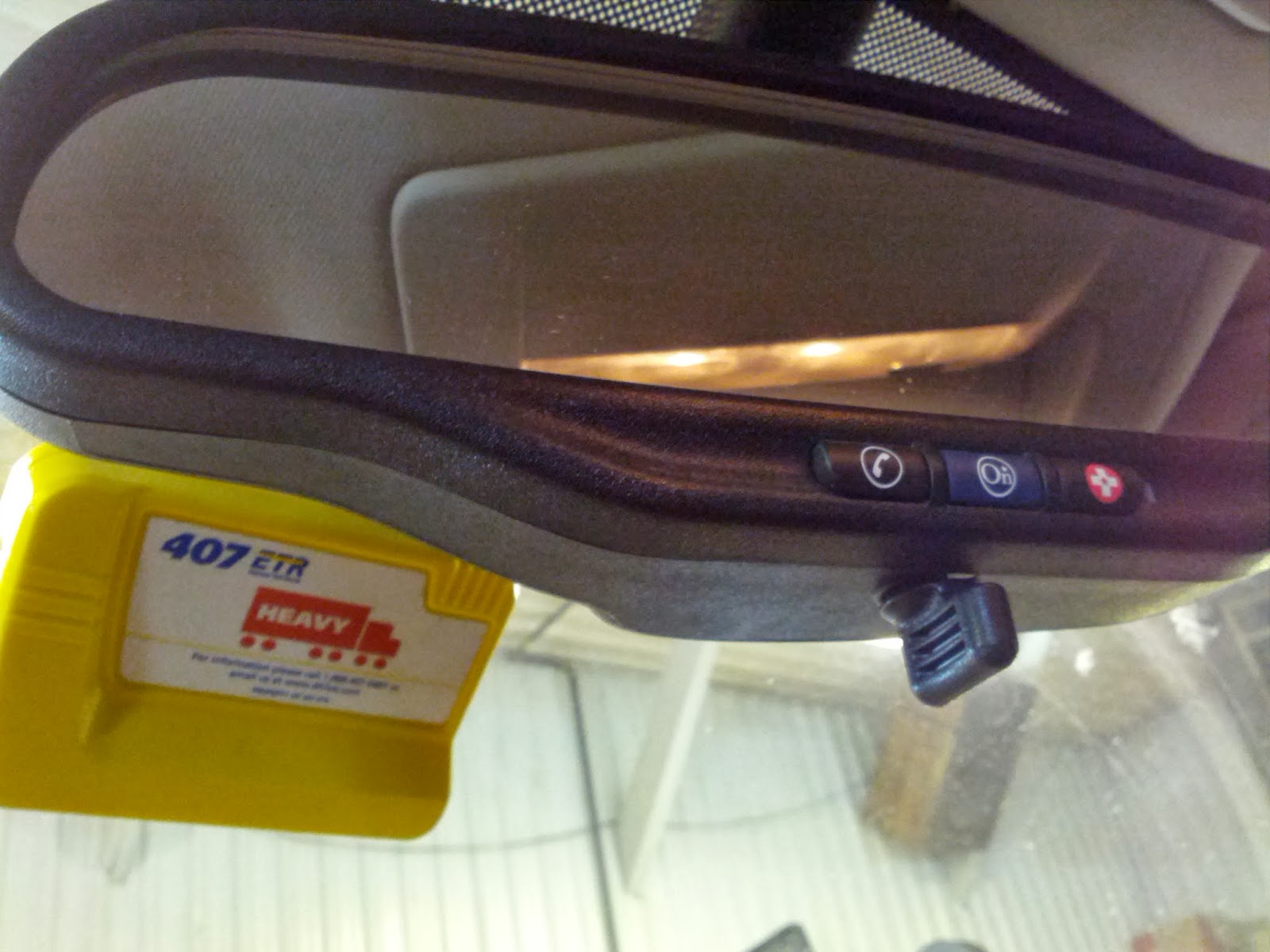
OnStar and electronic toll-road transponders - two ways in which you can already be tracked

There's been a lot of talk in the past few years about "Car to Car" communication as a way of reducing the frequency or even severity of multi-vehicle collisions. The US government has stated intentions to mandate Car to Car communication by 2017 (that is, to have a bill put into effect by 2017, not that cars would have to have this technology by 2017).

On the surface, this is a great idea, and many of the technologies involved already exist, even if they may require further refinement or expansion to suit this role. There's no doubt that the majority of the players in C2C (what I'll refer to "Car to Car" as from here on) have good intentions - car crashes still continue to claim more than 33,000 lives per year in the United States, though the numbers have been trending downwards since the early '80's, and are now at the lowest they've been since World War II. There are, of course, a far greater number of people that sustain life-changing injuries of some kind that these statistics don't cover. Canada's statistics are slightly lower overall than the US on a "per km traveled" and "per 100,000 persons" basis, but car crashes remain a very real concern.

So why am I not entirely pleased with C2C? Several reasons, actually.The premise of C2C is that vehicles would broadcast their relative position, heading, and speed over a proposed range of approximately 250-300 metres. In practice, with buildings and landforms potentially interfering, I'm going to suggest that the systems will end up having a greater output, say perhaps 500 metres. Heck, the 10 metre claimed range of my Bluetooth handsfree speakerphone is in reality easily double that in real life, as my phone often remains paired inside my steel-walled workplace as my car sits well away from the building out in the lot.

While I'm the last guy you'll see walking around with a tin-foil hat, I will acknowledge a certain amount of concern for the amount of radio waves we already saturate ourselves with. That is only a little, tiny part of my dislike for this continual broadcast; my concern is how easily this information could be used against you.

Proponents of C2C claim that vehicles will not be able to be individually identified by their C2C information, but I call bullshit. Just like your computer's IP Address can be used to track and even (not all that) roughly determine your location - how many pop-ups have you had that use your town's name? - it is unlikely that there won't be some kind of unique identifier or backdoor means of determining which vehicle is transmitting.

Further, if you are the only vehicle in a given area, it would not be difficult for the police to quite easily determine which vehicle it is that is broadcasting a speed in excess of the posted limit, even without the added bonus of heading and location information. Yes, folks, your car will tell on you, and it is not terribly difficult to imagine this data being used against you.

Similarly, much as is currently the case with electronic toll-road transponders, it would be dead easy for stationary nodes to monitor which vehicles pass by, and the ability for such information to be processed and stored already exists. Think about it; in amongst the several thousand cars on a given stretch of Ontario's Highway 407, most have entered and will exit the toll-road at different points, yet each will get billed for their usage, with the statements showing the exact times each way-point was crossed, a technology that has been in operation since 1997. 1997; when a 80 GB hard drive was huge, and the internet was dial-up. Think the technology has advanced since?

It should be pointed out that built-in telematics systems like GM's OnStar are already not only capable of tracking and transmitting speed, location, and specific vehicle ID (as well as lots of operational data), but actually already do do this, even if that information is said not to be used unless required for the service to function. It is both possible and legal, however, to disable these telematics systems, should the owner wish. Modern airbag modules also store a 5-10 second running snapshot of some vehicle parameters (brake application, speed, steering wheel angle, ESC/ABS operation, seat-belt use, etc.), stored in the event of airbag deployment - that "black-box" functionality can not be readily disabled without potentially affecting airbag operation. 

I don't consider myself a conspiracy theorist kind of guy, but do keep in mind that C2C is being pushed by the same government that has been steadily whittling away at its citizen's civil liberties in the name of security since 9/11. The connection isn't entirely implausible, nor is it totally unrealistic. Deliberate or not, it's very easy to see the system getting abused post-implementation, just as it's now possible to use cell phones for spying, a practice already acknowledged to occur. Where's that tin-foil hat?

Another concern for me is what I like to call "the ABS Effect". When vehicles with anti-lock brakes first came on the market, there was a pronounced increase in rear-end collisions with ABS-equipped models. This was not because they stopped so fast that non-ABS vehicles hit them (though there probably were more than a few of those instances too). It was because their drivers felt overly confident about the ability of their vehicles to stop faster, so they followed closer behind the car ahead, and took greater risks, having less concern for their stopping distances. The same thing happens with those who drive all-wheel drive models in inclement weather, and there's doubtless some degree of the ABS Effect occurring today with all post-2011 cars having mandatory stability control. Guaranteed that drivers will yet again put excessive trust in C2C, being even less aware of their situation than they are today. Never mind that for C2C to be truly effective, 100% of the vehicle fleet would have to have perfectly functioning C2C systems.

Which brings me to my final concern: implementation and serviceability. As a full-time working technician, I can tell you that despite ABS - a key component in stability control - being in wide use for more than 25 years, it still has durability issues when exposed to the real world environment of vibration and corrosion. Computers are hardly foolproof either - I just replaced the engine computer in a 2005 Buick that had only 25,000 km on it (did it die of boredom, perhaps?). Diagnosing and repairing the existing wireless components in today's cars, such as keyless entry, tire pressure monitoring (TPMS), and passive entry/starting, is already a challenge. (Let me tell you that TPMS, required in the US since 2008, has been a headache, as these systems are fragile and trouble-prone, and with no standardized implementation beyond transmitter frequencies, they vary in service ease between piece of cake and piece of, well, you get it.)

So when these C2C systems take a dirt nap, or worse yet, give erroneous information that results in a collision, who's going to be responsible? Will it be required by law that these systems be kept in working order as the vehicle ages or gets damaged? How will that be enforced? Will you legally be able to opt out? What are the legal implications if you're involved in a collision and your C2C system is determined to have been faulty? Will your insurance still cover you?

These are just a few of the questions that need to be addressed before C2C ever sees reality, and it's tough to imagine it getting rammed down the throats of US citizens, a nation that still does not have country-wide seat belt use laws (New Hampshire only requires their use by minors, for example).

There's little doubt in my mind that some form of C2C, just like fully autonomous vehicles, will eventually come into play. Likewise, I do think that there are very real benefits to such technologies. I believe it is still too soon however, and that there are still too many unanswered questions and unaddressed concerns for them to be mandated into use in the near future.

Wednesday, January 8, 2014

Jackass Award - GM Pickups Fuel Pump Control Module

2009 Chevy Silverado plow truck (with apologies for the CCTV-screencap image quality)

First, a bit of a back story. Electronic fuel injection was just hitting the mainstream when I began working on cars for pay (rather than to avoid paying...) just over 20 years ago. There were several different strategies involved in feeding the systems with fuel, all of which involved at least one electric pump. To prevent the pump from running unnecessarily after a stall, a crash, or just sitting with the key on, the pumps were usually switched on by either the engine computer (through a relay), an oil pressure switch, or both (early GM systems especially).

Most had a single in-tank fuel pump that delivered a constant feed of fuel at a pressure governed by a regulator (usually throttle-body or injector-rail mounted and vacuum controlled) that bled any excess fuel back to the tank through a return line.

Others - most notably the Europeans - would use a low pressure feed pump in or near the tank to supply a second, high pressure pump that ultimately accomplished the same function as the single-pump setup.

The odd vehicle had the ability to vary pump speed, usually through a dropping resistor, or via high frequency voltage toggling (known as pulse-width modulation). This was done primarily to reduce pump noise at low speed and idle, when demand was low and ambient noise less likely to disguise the ruckus.

As technology has introduced more precise injection control, a large number of vehicles have gone to what are called "returnless" systems, where there's no longer a second fuel line coming back from the engine compartment to return excess fuel supply. A single line simply supplies fuel at the required pressure to the injector rail. This eliminates some parts, but most importantly, prevents the fuel from being warmed by engine heat prior to its return to the tank, which apparently offers benefits in emission reductions and possibly even power production.

Often there's a fixed pressure regulator in the tank or a nearby filter/regulator assembly to make this single line system possible. Others vary the fuel pump's power supply to control its output and therefore pressure, usually with feedback from a fuel-rail pressure sensor. This is where our Jackass Award story begins.

An important note: GM is not alone in using the basic design I'm about to discuss. Ford trucks are well know for fuel pump control module failures, for example. But some questionable engineering choices do make the one used on GM's recent model year full-sized pickups - the example featured, the first of these I've encountered, is a 2009 model - Award-worthy.

This seemed like a good idea to someone...

The above photo shows where GM chose to locate the Silverado's (and the identical Sierra's) FPCM (Fuel Pressure Control Module), just above the spare tire beneath the box at the rear of the truck. Ford is equally guilty of mounting the fuel pressure control module where corrosion will eat it. They were doing it well before GM decided to follow suit. Hey, if it didn't work for Ford...

To diagnose this thing, most of the trouble code diagnostic "trees" require you to unplug this connector. The lid swings down to unlatch it - impossible, by about an inch, with the spare tire in place. Ever lowered the spare on a modern pickup?

Rube Goldberg would be proud

I have. Fortunately, this truck , in spite of being used for plowing snow and landscaping, is well-kept, clean, and not a big muddy ball of corrosion, so the process was only slightly aggravating: find and extract the toolkit (often buried or missing), unlock the spare tire lock (good seize-in-place potential), assemble the correct sequence of crank segments (instructions? Who needs 'em?), spend a few minutes trying to get the tool to align and function in the winch (you'd think the built-in guide would make that a first-attempt thing. It doesn't.), crank the spare down.


Finally able to disconnect the connector, we verify that the module has failed and needs to be replaced. Surprise! Our local dealer has one in stock.

On the vehicle, this view is only possible with a mirror, a boroscope, or a cameraphone jammed up against the floor of the box. Nice corrosion.

If you look closely at the spare tire-view photo, you can see that the module is fastened to the bracket it's mounted to from above. A Jackass Award qualifier. Extra Jackass points though because the fasteners in question are rounded-head Torx bolts with fine threads - seen from the top, after mild, fruitless digging out with a pick - in the above photo. The three of those are not coming out without a level of personal attention that's all but impossible in-situ.

Another cameraphone-aided view. Only my hand could see this otherwise. Thank goodness for ratcheting wrenches.


The FPCM is mounted to a large bracket that also holds the TBCM (Trailer Brake Control Module) and another small electrical component. It bolts to the left frame rail and the spare tire winch mount. Fortunately, its three fasteners have conventional hex-heads, though, in true Jackass form, they are also top-mounted, and the winch-side one is conveniently and for no apparent reason located directly beneath the pickup bed's reinforcement beam. There will be no using air tools or even a ratchet on those. Nice. (At least this particular truck was mud and corrosion free.)

Voila!

I think I may have peed...

Once extricated from its bracket, the FPCM peed on our bench. Actually, I was glad to see this, because condemning electrical components can be stressful because you usually can't see anything wrong. Water leaking out? I'm feeling pretty comfortable with my diagnosis! It may need more, but it definitely needs this.

Note that the silver side seen above is the top. The plastic tub forms the bottom, making a decent water-retaining bowl. Obviously the thin layer of sealant wasn't enough to keep the water out (or in). You surely wouldn't want to mount it the other way, and give it a fighting chance.

Carefully opened afterward with a 24 oz ball-pein hammer, water can be seen inside. Think those IC chips like water?

The new one has a thick bead of sealant oozing out of it. It got new bolts too, though they didn't come with it.
So we get our new module, mount it to the bracket, fish the bracket's top-mounted fasteners back in and ratchet-wrench them tight, successfully clear the trouble codes, crank the truck, and get...  ...a brief fire-up followed half a second later by a stall and refusal to restart.

Recheck the codes to see what else is wrong, and see..

That's not good.

... that the FPCM needs to be programmed. It's a several hundred dollar box of rocks without the proper software. The common-failing Ford truck fuel pump modules don't need this. They're even available from the aftermarket, plug'n play. Not this one; the final, Jackass Award-clinching move.
Shouldn't have been a surprise, actually, because in this generation of GM pickup, even the power window switches have to be programmed when replaced. Got an identical, same year truck, identically optioned, and want to temporarily swap the switch to put a window up when the original switch breaks on a -25ÂșC day? Won't work - not programmed to that truck, as one of our tow-truck fleet operators discovered, to his extreme pleasure.

Money, money, money...

At this point there are a couple of options.
- Tow the truck to a dealer (what GM would clearly like you to do, though they'd probably be happier still if their dealer had diagnosed and replaced the module in the first place).
- Tow the truck to a shop that has GM programming capability (which they have to pay to subscribe to - GM is still making a smiley face).
- Program it yourself. Assuming you have the several thousand dollars worth of equipment and/or software to do it, of course. You will also have to pay GM a subscription fee to access the download. $55US gives you 2 days of access to that content, for example, so GM still wins.

-------------------------------------------------------

For designing a vehicle that even requires a stand-alone module to operate the fuel pump, then making that module vulnerable to moisture intrusion and mounting where such intrusion is virtually guaranteed (particularly in a vehicle type that frequently gets operated in exaggerated conditions), then making replacement of the module physically difficult by fastening it with corrosion-prone fasteners mounted on the backside of a bracket sandwiched beneath a pickup box (rather than just attaching it from the underside), and ultimately requiring that said module then be programmed for the simple task of running a fuel pump - General Motors, I'm forced to hand you a Jackass Award.

Tuesday, January 7, 2014

Shameless Self-promotion

Just a few of this year's Christmas Gift suggestions - A Blipshift shirt, Harveys Seatbelt purse (or wallet), and Mechanix gloves

It's getting more and more difficult to link to the Toronto Star's Wheels Section's website - wheels.ca - to share my articles with you, as not everything that sees print finds its way onto the web. So to share my work with you when that occurs, I'm going to publish the whole thing on my blog instead.

Do bear in mind that what you're seeing below is essentially the raw article as submitted (tidied up slightly for www presentation), not the final article as professionally edited and published in the Star. Note that the price points were specified ahead of time, and all Wheels' contributors had the same criteria to work with.

Too late for Christmas perhaps, but these would also be great birthday presents too.

Please leave me a comment if you have a preference between my doing it this way or photos of the printed article as I've done once before.


Brian’s Christmas Gift List – 2013

Gift for Someone else, $(unlimited)

I’m not shy about my lack of interest in NASCAR racing. Sure, it takes real skill and has exciting moments, but it’s just not my thing. My Mom, on the other hand, is a road racing fan and loves NASCAR.

Last year she attended her first ever NASCAR race in Las Vegas. Her sister and brother in-law vacation there, so they met up and went together - she enjoyed it so much she’s going again this year. Mom would really love to go to Bristol, Tennessee to watch a night race at Bristol Speedway, her favourite track, but she’d never go by herself.

My cost-no-object gift this year would be tickets for the three of them to attend the Night Race, plus the airfare, transportation and accommodations necessary to bring Mom from Toronto and them from Edmonton.

Savannah, Georgia-based “There and Back Again Adventures” offers packages that include hotel, coach transfers, guides, and track tickets to numerous NASCAR races, including Bristol. A package featuring a classy historic hotel in nearby Greeneville starts at $599US per person (www.thereandbackagain.com). A quick look at Air Canada’s website (www.aircanada.com) suggests their flights will cost approximately $7000, and I’d factor another $1000 for ground transportation to and from Knoxville airport.

Gift for up to $50 (1)

Got a real gearhead on your list? A T-shirt (or hoodie) wearing someone who’s immersed in car culture and loves in-joke references? Check out the latest offering on Blipshift – a website that offers a continually changing, limited-time-only, selection of quality shirts and hoodies featuring graphics relevant to fans of the automobile. Shirts start at just $15US. (www.blipshift.com)

Gift for up to $50 (2)

As the weather turns cold, you (like me) will probably be tempted to wear gloves, at least for the first little while, on those chilly days. Unfortunately, most winter gloves are bulky and ill-suited for safely holding the wheel or operating controls.
While not insulated, I’ve found Mechanix work gloves keep my hands comfy enough in a cold car, and their synthetic leather palms provide a positive grip while retaining dexterity. Widely available; $29.99 per pair at Canadian Tire (www.canadiantire.ca).

Gift for up to $100 (1)

Look at almost any car with plastic headlights that’s older than five or six years and you’ll likely find discoloured, cloudy lenses. It’s partly pitting, but mostly degradation of the plastic from UV. It’s often possible to repair it, but I’d rather prevent it. Lamin-X sells pre-cut stick-on plastic film light covers for a large selection of popular vehicles, available in clear (street legal) and various tints and shades (take your chances), as well as other protection items. A 4-piece set for my RX-8’s head and fog lights is $49.95US plus shipping. (www.lamin-x.com)

Gift for up to $100 (2)

A while ago my wife received a Harveys purse as a gift. Made almost entirely out of seatbelt webbing, we both thought it was really cool. Of course, being a deep red-coloured purse, it's not something most males (myself included) would want to tote around. Turns out that Harveys also makes men’s stuff, including the Treecycle Wallet, made of salvaged seatbelts. I quite like the two-tone C-2200 style; $58US plus shipping, www.seatbeltbags.com.

Wednesday, November 27, 2013

Shameless Self-promotion

2014 Mercedes GLK 250 BlueTec 4Matic

You can find my Toronto Star coverage of this year's AJAC Canadian Car of the Year here. My assigned category at this year's TestFest was "Best New SUV/CUV ($35K-$60K)". The Mercedes GLK turbodiesel pictured above was among the entrants in this category for 2014, and counts as one of my favourites. Others included the GMC Acadia Denali, Hyundai Santa Fe XL, Jeep Grand Cherokee, and the Kia Sorento.

Sunday, September 29, 2013

Shameless Self-promotion

2013 Chevy Malibu LT
Yet another tardy update for my blog. I'm going to blame it on having a busy life. It might also be from spending too much time watching entire seasons of TV shows on DVD with my family. Being too busy sounds better, so we'll go with that.

The car that you see above is Chevrolet's 2013 Malibu in LT trim. You can read my Wheels review of it here.

The gist of it is this: the last Malibu was a decent enough car*, and this one largely builds on that car's success. There are some problems though, not the least of which is a seemingly insignificant reduction in rear seat that occurs at a time when most of the Malibu's competitors are expanding that same dimension. It's also arguable that this generation's styling is nothing special, however changes have occurred for 2014 that help in that regard.


* (Keep an eye open for my future blog entry on one particular, very stupid shortcoming of the previous generation Malibu.)

Sunday, June 2, 2013

Shameless Self-promotion

2013 Cadillac XTS Premiere AWD

Oops! Hadn't realized that I hadn't updated my blog to reflect the publishing of this article. You can find that article - my Toronto Star Wheels review of Cadillac's 2013 XTS - here.

As a side note, my shooting this car at the location of this photo (taken in the XTS' hometown of Oshawa, Ontario), was interrupted by a police officer (I had driven into this parking lot right past him as he sat in his Tahoe) who apparently felt that my picture-taking - in what was admittedly a private-property parking lot - was an issue, despite the fact that I was not in anyone's way, was not in anyone's spot, did not block a driveway, and was not shooting anything that could possibly identify the location or infringe on someone's privacy.

Officer, thank you for ensuring that at least one of the photos that I did get before you parked your Tahoe in front of this caddy got submitted, as that was the photo that my editor chose to run.

Saturday, April 13, 2013

Shameless Self-promotion

Toronto Star Wheels - April 13, 2013
I'd love to link you to my latest contribution to the Toronto Star's Wheels section - my coverage of the 15 finalists for the inaugural Canadian Green Car of the Year Award - however it does not appear to be on their website, www.wheels.ca, at the present time. I guess you'll just have to check out some less than stellar photos of the paper until such time as I can properly scan it, or it gets uploaded. That's my photo of the Mercedes-Benz B 250, incidentally.

While not known in time to make the press, the overall winner was the Ford Fusion Hybrid.

Sorry about the second-rate posting, folks!

Toronto Star Wheels - April 13, 2013

Toronto Star Wheels - April 13, 2013